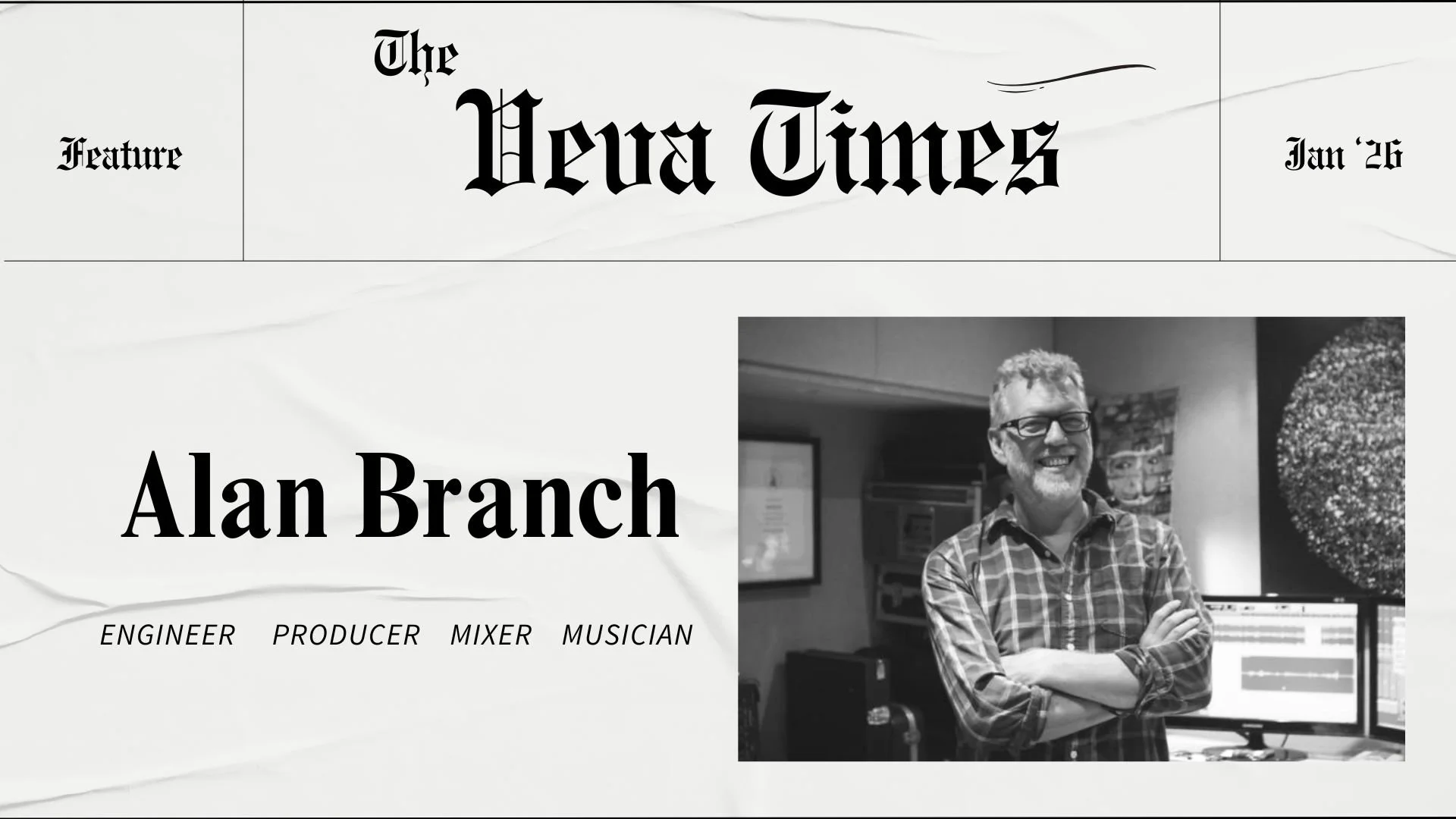
Alan Branch
Can you take me back to the beginning? How did you first get into audio engineering, and what made you realize this could become your career?
While I was studying music at uni, I stumbled upon an unpaid “Tape Op” gig at Topic Records, a legendary English folk label. The moment I stepped into the studio and got a taste of the daily routine, setting up microphones and preparing tape machines, I was hooked! While working nights at local studios, I landed a dream job at the infamous Roundhouse Studio in Camden Town, I’m still not sure how I got the job, I owe a lot to the studio owner Gerry Bron. Full of amazing engineers to learn from, I knew then this is what I wanted to do.
How would you describe your mixing style today and how has it evolved since you first started?
My mixing style evolves constantly - as it’s so song-dependent. I think I’ve developed a more experimental workflow over repetition, that helps intuitive mix decisions. I’ve been fortunate to work on so many genres that helps open my mind to what’s possible in a mix. I do like to strive for excellence and originality, as crafting a great mix can evoke a wide range of emotions. I have an old saying that a mix is never finished; it’s abandoned in near perfection.
When you’re working on a mix how do you balance the emotional/artistic side of the music with the technical side of engineering?
The technical and artistic sides of mixing intertwine, but dance a bit of a fine line. Over-working things can kill the character of the track. For example, a vocal centre stage can take listeners from bold, screaming grooves twisting divine melodies to whispered, heart-tugging stories. So you have to treat it with care!
You’ve worked on so many notable records. Are there any projects or moments that feel especially meaningful to you, either creatively or personally?
“Jeff Beck’s ‘Performing This Week… (Ronnie Scott’s sessions)’ and Sinéad O’Connor’s ‘Sean-Nos Nua’ are two of the deepest. These legends are now gone, but I shared years with them. Jeff was warm, soulful, endlessly down-to-earth, we had endless laughs in the studio, I’l always be thankful for those times. Recording Sinéad’s album in Ireland was already special, towards the end she came to me & said it was hard for other producers on the record to share their points, but she loved the work I’d done and wanted me to have a production credit. So, she would share some of her points with me. What amazing generosity.
With so much music being made remotely, how has file sharing and digital collaboration changed your workflow?
A great mix is still the same goal, but file sharing and digital collaboration have made the workflow simpler. While writing and recording together is still great in studios, it’s never been easier to do remotely. Video chats and messages make it easy to share ideas and get feedback on shared goals. Because of this, it’s crucial to have a reliable and easy-to-use file transfer system – a secure, central drop-off where everyone can grab the latest mixes without any issues.
Do you think better file management can actually lead to better music? Why or why not?
Crafting songs is influenced by many factors, and for me, efficiency of time and file organisation give me more “ear time” for the production process and reduce distractions. As an engineer, I believe this is a crucial aspect of the job. Disorganised files can waste time and be inefficient, plus increase the risk of master files being lost!
How does quick, secure file sharing impact the creative flow of a project?
Quick, secure file sharing can keep the creative flow alive. Large projects can juggle insanely busy managers, artists, production management, and a record label. I need them all to be on board at the same time. If you give them anything complicated, they don’t have the time or the patience to work it out. So, file sharing that’s simple but secure is a hard task to get right.
Recently you’ve done a lot of live sound for artists on the road, what are the challenges working with live verses in the studio?
Challenges on the road are so different to the studio, mostly logistical, getting equipment in and out from venue to venue and ensuring it all fires correctly on show night. Then there is tweaking the show, last-minute set list changes, the wild unexpected surprises that often happen during the show with the crowd energy, which make it exhausting but exhilarating. It truly is where music comes alive.
At this point you’ve worked with so many prominent artists, but can you give us one that you would love to produce or mix?
There are plenty of big artists I’d love to work with, but honestly, I love helping the ones just starting out. I’ve worked for artists who weren’t known then but blew up later; that’s a magical feeling, being a part of that journey. I suppose I’m passionate about making great songs for the artist first and foremost; whatever their dream, I endeavour to make it come alive in their music. I mixed an album for an artist once who called me to say they finally made the album they always wanted. That meant everything to me.