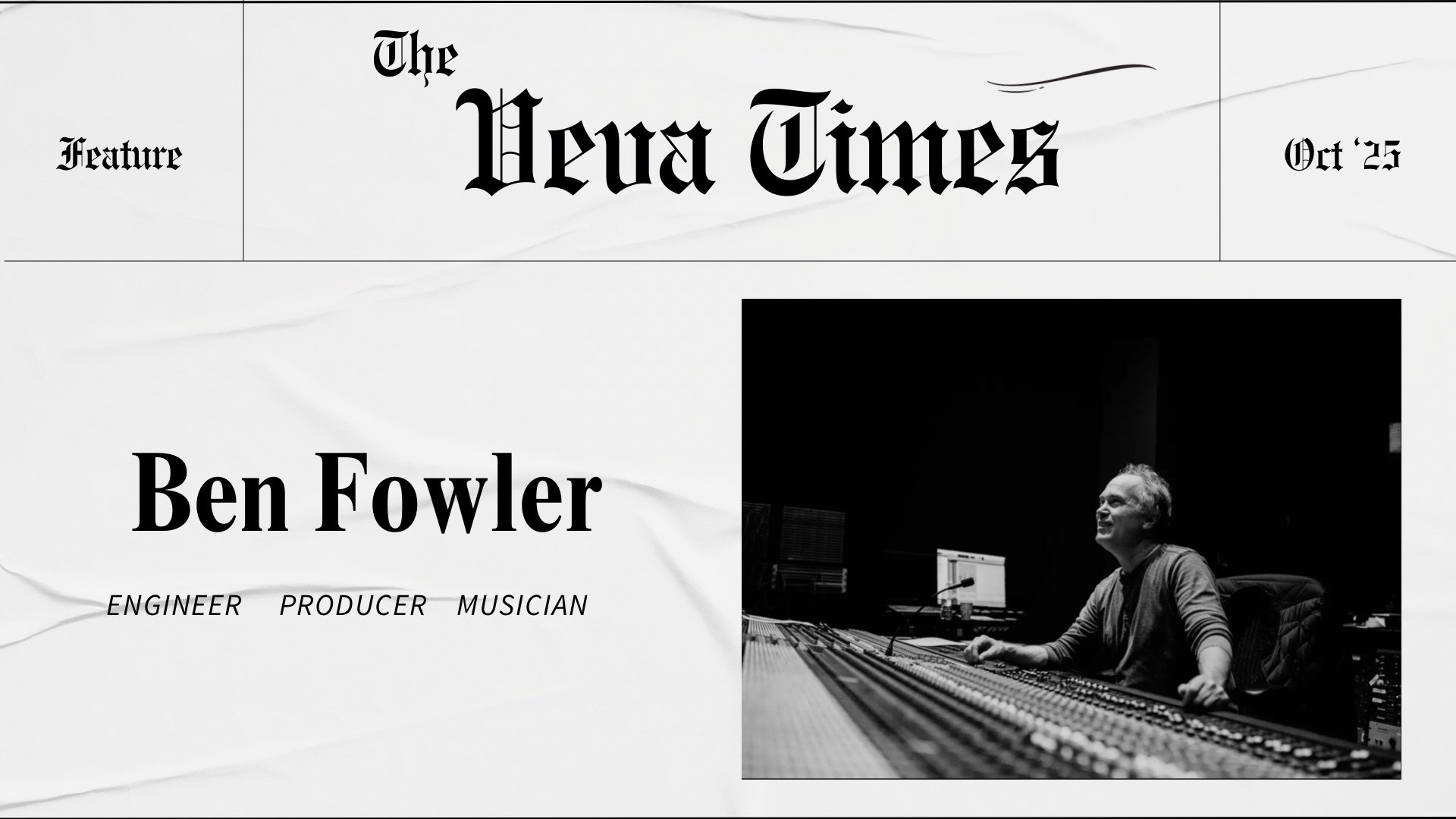
Ben Fowler
Where did you grow up, and how did your environment shape your early connection to music?
I am from Oaklandon, Indiana. A small town at the time - surrounded by family farms … and the big city that was quickly creeping closer. I took some piano lessons early on, but violin was really my first instrument, followed by brass. I was always fascinated by my parents’ old-school record player console - it sparked a deep curiosity in music & sound. I soon discovered Aerosmith on vinyl & was instantly infected with the importance of the cool bass guitar parts on those records, as well as their unique sound. So Bass became the focus. My quest to hear more Rock of that era led me to continue to listen, practice, and soon start playing in bands. Never in my wildest dreams did I ever imagine that it would lead to working with many of those people I had listened to later on.
Can you share the story of how you first got started in music production?
I was in a band in college called the Lynx Band and we traveled around Indiana & neighboring states. The short story is - somehow that led to an opportunity at PowerStation Studios in NYC. I started at the very bottom, slept in a utility closet for 2 yrs on the rooftop floor of the Studio, it was free, but I was always on call. We were surrounded by the best talent in music at the time. The artists recording there were ruling the radio & having huge hits in that era. There was a real hierarchy in the studio world back then… and a willingness to teach new staff who worked really hard and had the curiosity to learn.
Was there a particular mentor, artist, or moment that inspired you to pursue producing as a career?
Tony & Barry Bongiovi hired me at PowerStation and gave me the opportunity to grow, or go. Russ Titelman, Dave O’Donnell, and Alex Haas - these amazing producers and engineers taught me how to make records, interact creatively and professionally with artists and clients. They had a quest and a drive to make the best music possible. There have been so many more kind and talented people along the way as well.
How does quick, secure file sharing impact the creative flow of a project?
Well, first of all -trust -We’re dealing with musician’s art that hasn’t been heard or released. The security of these assets is so incredibly important. But in regards to the “quick” part of the question: There are always audio emergencies …as I call them … and emerging deadlines. I certainly don’t miss the sharing physical tapes and hard drives.Being able to receive files, provide your part or service, and then deliver the files instantly is now the world we now live in.
What role do tools like VEVA Collect play in building trust between collaborators?
Their security standards and authentication steps. And also Veva’s talented team for the Delivery Verification & the QC process ensures that these valuable assets will be fully in order for future uses and evolving formats
Do you think better file management can actually lead to better music? Why or why not?
I do! There are many levels to this - when something is well delivered with good file management care …. I can immediately start being creative and moving it forward. And hope to do the same for the next person down the line. And thanks to The Recording Academy‘s Producer & Engineer Wing & other contributing industry professionals - for creating and updating the widely accepted Delivery Recommendations Document. I’ve seen a huge improvement in the way files are standardized and cared for when sent my way. We all hope the music we are working on lasts for a very long time. And as formats change & evolve, it’s nice to have dependable authenticated assets.
Are there aspects of your workflow where AI has already made an impact (e.g., mixing, mastering, organizing files)?
Yes, only in an engineering capacity. I’ve used it most recently to clean up live concert recordings. The ability to remove stage noise, audience, drums, guitar, etc., from a vocal mic. has been simply performance-saving. And for mixing studio recordings - for surgical noise, hum, and click removal.
Where do you think the line should be drawn between human creativity and AI automation?
As an engineering tool, I think there are many great applications. But as a creative tool, I want my music exclusively made by humans. I don’t know quite how it could be implemented, but I’d like to see disclosure flag, stamp, or designation that reveals to our listeners if AI was used in the creation: whether it was used to create lyrics, melody, voices, or musical parts. From my early years, I was drawn to music by the way a record could make you feel. And it never gets old being in a tracking studio full of amazing musicians, a great song, and watching their collaboration make worktape into a record.
How do you see AI affecting the way credits and ownership are tracked in music?
Certainly, we all want to be credited to be as accurate and up to date as possible … that’s often how we grow our awareness of our contributions & continue to get called for future projects. I believe a positive use of AI is - searching, analyzing, organizing credits and royalties. Often the cost of having someone do this far outweighs the modern-day returns. Hopefully it can assist and allow us to be focused and productive on creating music.
Ten years from now, what do you think will be the biggest difference in how producers collaborate and share files?
Well, I’m hopeful that we’re still recording music with humans in the room - listening, looking, and making collective decisions that make great music. I don’t have a crystal ball… but we are all increasingly working on more artistic collaborations - blending genres & styles from all over the world. Real-time audio collaboration platforms and software - are making - what would’ve been financially impossible - into some pretty great musical performances.