
Dave Clauss
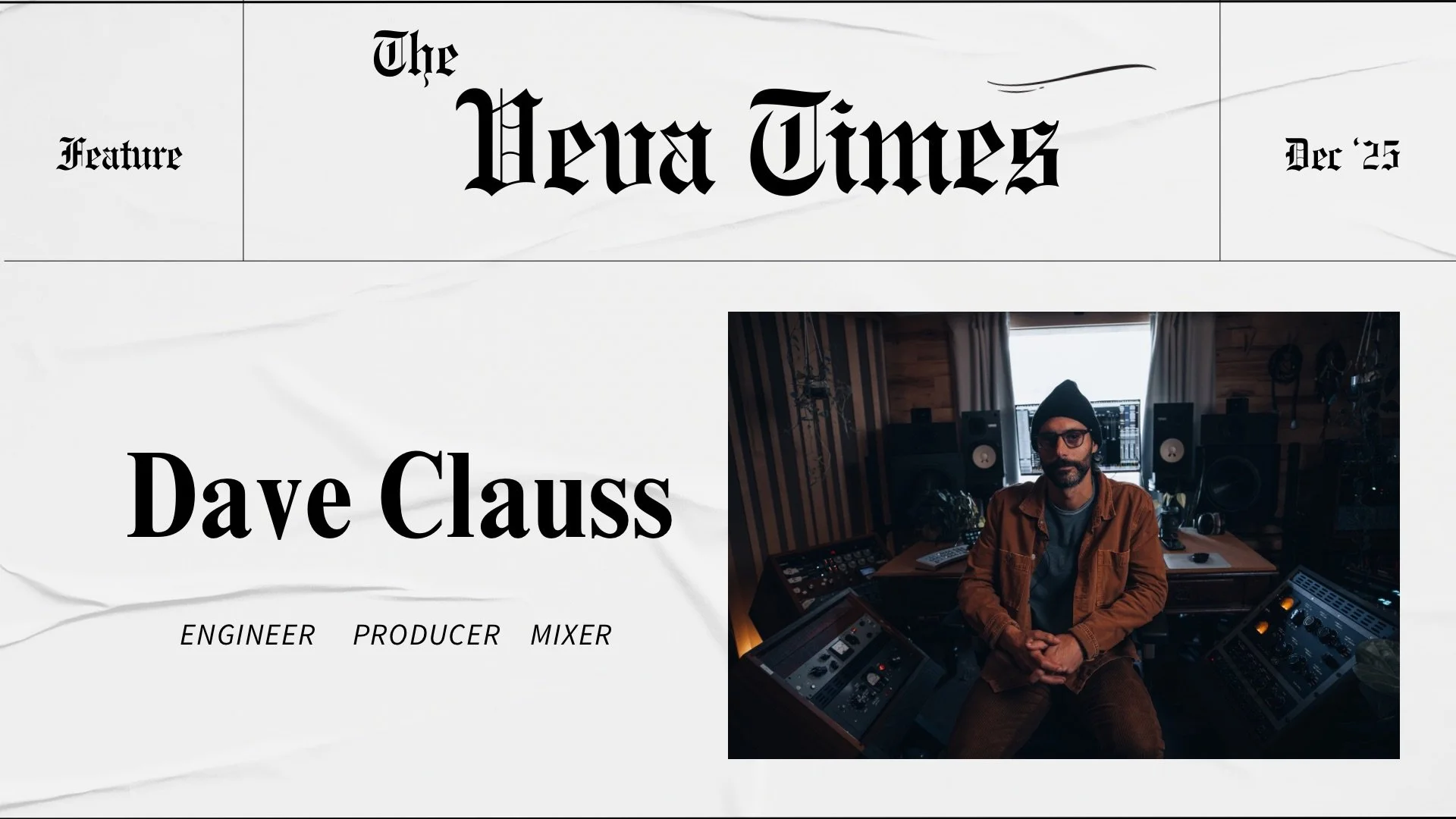
Can you take me back to the beginning? How did you first get into audio engineering, and what made you realize this could become your career?
I grew up breathing music. My dad had a Jazz band and my family was all about music, especially jazz. When I started playing guitar in a band, we needed demos, and naturally, someone had to hit record. That first experience capturing us on a 4-track wasn't about perfect fidelity; it was about capturing the vibe. That small moment—shaping sound to hold onto a performance—that’s when I was hooked. I went to Full Sail in Orlando and then straight to New York City to intern at any studio that would take me. I dove in head first.
You’ve worked on so many notable records. Are there any projects or moments that feel especially meaningful to you, either creatively or personally?
The first two Maren Morris records—Hero and Girl—stand out. Working with the late Busbee was the best kind of controlled chaos. We weren't trying to copy anyone; we were just throwing paint at the wall, dedicated to making the most unique, feeling-oriented record for her and for us. Losing Busbee so soon after made that connection even deeper. It was a real lesson that you have to chase the emotion in the performance, not just the perfect numbers on a meter.
How would you describe your mixing style today, and how has it evolved from when you first started?
Today, I'm focused on making records that last. My goal is always to bring the emotional impact to the forefront while ensuring the track has a voice that cuts through the noise of everything else sounding the same. The biggest shift is that I commit to the whole process now—from the first day of recording through the final master. When I was younger, I was stuck strictly in the technical weeds. Now, I see the whole picture, which is the only way to truly break out of that box of sounding average, in my opinion.
When you’re working on a mix, how do you balance the emotional, artistic side of the music with the technical side of engineering?
I completely eliminate the technical distraction. The way I do that is by having an incredibly streamlined, reliable template. Everything I need is instantly available, so I’m not wasting time clicking through menus or solving setup issues. That automation gets the 'tech BS' out of the room. Once that foundation is solid, my brain is free to focus 100% on the art and the feeling.
With so much music being made remotely, how has file sharing and digital collaboration changed your workflow?
It’s the backbone of everything now. None of this scale would be possible without the digital handoffs, real time notes, etc. it’s all instantaneous. If the file transfer isn't rock solid, the creative flow dies, so that reliability is the first thing I check. All that said… it’s so important that we don’t lose the human connection along the way. So, my preference is always to get artist, producer and myself to Santa’s Workshop to dial it in on the last rounds.
For people trying to break into engineering or production today, what skills or habits do you think matter most?
Hustle, and a lot of it, paired with passion. This is not a biz for the faint of heart. Early on, I worked until I couldn't anymore. It was an obsession, but you have to put in the hours to learn the mechanics. But, more importantly, you need that genuine connection to the music. That 'feeling' is what people pay for, but the hustle is how you earn the right to be in the room.
Since we’re all filled with the holiday spirit right now, if you ever got the chance to mix or remake a holiday classic, which one would you choose and why?
Absolutely. It’s actually kind of funny—my studio is called Santa’s Workshop, so I live this already! I’ve done a bunch of Christmas albums, but the one that really set a standard for me was the Gwen Stefani album produced by Eric Valentine. We went full Phil Spector wall-of-sound—live band, horns, strings all recorded together in cool spaces. If I could pick one, I’d find a classic and give it that same kind of grand, immersive, big-room treatment.